
Among the fatalities recorded on Friday, the maximum 17 were from Uttar Pradesh, 14 from Bihar, five from Odisha and four from Jharkhand, where officials said more than 1,300 people are hospitalised with heatstroke conditions.

India is set to experience extreme heat during the April to June period, with the central and western peninsular parts expected to face the worst impact, the IMD said on Monday as the country prepares for seven-phase general elections from April 19.

'Whatever you do will spark controversies, so it is best do what your heart tells you to do. Simple.'

Satellite imagery showed a dense elongated band of fog stretching from Punjab to the northeast.

The heat wave is likely to impact parts of Jammu and Kashmir, Himachal Pradesh, Uttarakhand, Punjab, Haryana, Delhi, Rajasthan, Madhya Pradesh, Jharkhand, Odisha and Gangetic West Bengal, the Met office said.

Kashmir is reeling from a heat wave after the valley earlier this week witnessed the second-hottest September day in recorded history, causing hardships to locals and tourists alike.

Mercury hovered around 40 degrees Celsius in large parts of the country on Monday as the Indian meteorological department predicted heat wave conditions in parts of east India over the next four days and the northwest region over the next two days.

Several deaths were reported across the country due to rain-related incidents like lightning strikes and drowning.

Amid a cold wave prevailing in parts of northern India, Palam in Delhi recorded a minimum temperature of 6.5C while Safdarjung recorded a minimum temperature of 5C, said India Meteorological Department on Monday.

Two empty chairs -- one each for jailed Delhi Chief Minister Kejriwal former and former Jharkhand chief minister Hemant Soren -- were kept on stage as the Indian National Developmental Inclusive Alliance (INDIA) organised a mega rally in Ranchi on Ranchi.

'When you watch Freedom At Midnight, I want you to feel like you are sitting on a ticking time bomb.'

Stifling heat has killed more than 1,242 people in India in less than one week.


Large parts of north India reeled under numbing cold on Tuesday with the mercury remaining below freezing point at most places in Jammu and Kashmir, while dense fog in the early hours of the morning hit road and rail traffic movement.

Temperatures in March will be critical to determining the impact of any unusual heatwave conditions on this year's wheat crop in North India. It is that time of the year when the crop enters its vital grain-filling stage, say meteorologists and crop experts. So far, the high day temperatures in the North are not believed to have any significant impact on the final yields since the crop hasn't entered a stage where heat affects yields.

The national capital, parts of which reeled under heatwave conditions for the past few days, had some relief on Wednesday with strong winds and partly cloudy skies witnessed during the day.

Delhi's primary weather station, the Safdarjung Observatory, registered a maximum temperature of 40.4 degrees Celsius, four notches higher than normal.

The cold conditions on Wednesday tightened its grip in Punjab and Haryana with minimum temperature dropping to five degrees Celsius below normal, even as most parts of the region were engulfed with fog and mist disrupting normal life.

Delhi recorded a cold wave for the second consecutive day on Friday, with the minimum temperature at Ayanagar in southwest Delhi plunging to a numbing 1.8 degrees Celsius.

Delhi's minimum temperature on Wednesday morning plunged to 4.4 degrees Celsius -- the season's lowest -- making the national capital colder than Dharamsala, Nainital and Dehradun.

Delhi saw seven cold wave days in January 2020, while it did not record any such day last year.

While the Aam Aadmi Party is contesting on four seats, the Congress has fielded candidates for the remaining three seats.
"Conditions are favourable for dust storms over Delhi and nearby areas. We are expecting a fall in temperatures," Dr R D Singh of the Indian Meteorology Department said.

Above-normal heatwave days are predicted in most parts of central, east and northwest India during this period.

'We just need to keep backing ourselves. With three games to go, we don't want to test ourselves but keep the momentum going.'

'What we are seeing is some bursts of a cold wave.' 'It comes, troubles you for three-four-five-days and thereafter relaxes for another few days.' 'And then another fresh one (cold wave) comes.'

Dense to very dense fog prevailed in some parts of the National Capital Region (NCR), Haryana, Punjab, west Uttar Pradesh and north Rajasthan on Tuesday.

Operations at the Delhi airport remained normal. However, three flights were returned or diverted to the Delhi airport due to bad weather in Chandigarh, Varanasi and Lucknow on Tuesday night.
Rains lashed Karnal, Rohtak, Ambala and Panchkula in Haryana, while Patiala, Jalandhar, Phagwara and Nangal Dam\n\narea in Punjab also received light showers.

Dense to very dense fog engulfed the Indo-Gangetic plains, including Delhi, for the second morning on the trot on Tuesday, lowering visibility to 50 metres in the city and affecting road traffic and train movement.
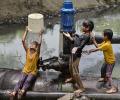
Western disturbances are near Pakistan-Afghanistan and are moving towards Delhi and thunderstorms or dust storms are likely to be experienced in northwest India, senior scientist at IMD RK Jenamani told ANI.
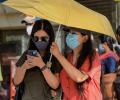
A tormenting heatwave swept through North India on Sunday with the mercury crossing 49 degrees Celsius in pockets of Delhi, while the weather office forecast some relief Monday onwards.

According to a tweet by the weather expert, the icy, severe chill would be experienced between January 14 and 19 and is likely to be at its peak from January 16 to 18.
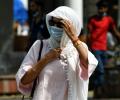
No part of northwest, central and east India is likely to record a heatwave over the next five days, the MeT office said.

The weather department has said that the skies are expected to be partly cloudy for the next few days in Delhi.

In Rajasthan, 13 deaths related to rain and storm were reported over the last two days while at least 12 people were killed due to lightning strikes in Jharkhand during the same period, officials said.

'It is a breathtaking journey towards the Tibet border, especially since the Border Road Organisation has accomplished a fabulous feat in black-topping the road till the border.' 'One is left with a salute for the dauntless Indian soldiers who spend the winter in these majestic, though inhospitable areas (we were told that the temperature comes down to minus 40 in winter),' recounts Claude Arpi.
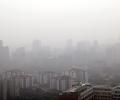
Air quality in Delhi and its suburbs dropped to the severe category again on Wednesday morning, with smoke from post-harvest paddy straw burning in neighbouring states accounting for one-third of the air pollution in the national capital.
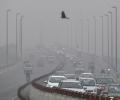
With Delhi recording air pollution levels seven to eight times above safe standards on Monday, the city government announced the return of its flagship odd-even scheme after four years anticipating further deterioration of air quality post-Diwali.

The poisonous haze has been causing significant problems for people with existing respiratory issues, according to doctors.
